
A Blockchain Primer › Module 4 › Lesson 4.4
Lesson 4.4: Turning Real-World Assets into On-Chain Tokens — Tokenization, Classification Criteria, and NFTs
- #1. The Core Question
- #2. An Everyday Analogy
- #3. Core Concepts Explained
- #4. Diagrams
- #5. Key Takeaways
- #6. Quiz
The last lesson brought off-chain data into smart contracts. This lesson looks at another common application: representing valuable real-world assets or rights as digital tokens on a chain.
1. The Core Question
Why is a banknote worth anything? If you cut it in half, why isn't each half worth half the money? And what exactly is an on-chain "token"? How is it different from cryptocurrencies, NFTs, loyalty points, or bills?
This lesson answers three questions: What are tokens and tokenization? How are digital tokens classified? And where do NFTs and ordinary cryptocurrencies fit in?
The short version: A token is a compact object that "has value in a specific context." Tokenization carries that value over into the digital world and manages who owns it.
2. An Everyday Analogy
A Banknote Cut in Half
You have a 5, but the shopkeeper doesn't have change. So you cut the bill in half, hand over one half, and keep the other. Now neither half is worth $5. Both halves have lost the bill's value completely.
A banknote is a physical token. Its value isn't what the paper and ink are worth. It's the payment value it's been given inside a specific economic context. Cut it, destroy it, or take it out of that context, and the value is gone.
A House Key
A key is small, and the metal in it is worth almost nothing. But it opens your front door, so it's very useful. Separate the key from the lock it fits, or melt it down, and all that's left is the value of the metal.
A key is a kind of "security token": it stands for the right to enter a protected space.
3. Core Concepts Explained
3.1 The Five Characteristics of a Physical Token
A physical token has to meet these conditions:
- It's a compact physical object.
- It has a clearly defined context of use.
- Within that context, it has an assigned purpose and value.
- The assigned value is usually higher than what the material itself is worth.
- Once it leaves the context, or gets altered, taken apart, or destroyed, it loses the assigned value, and only the material value is left.
Banknotes, coins, stamps, coat-check tags, licenses, passports, ID cards, driver's licenses, diplomas, and works of art can all be seen as physical tokens.
3.2 The Five Characteristics of a Digital Token
A digital token has to meet these conditions:
- It's a compact digital object.
- It has a clearly defined context of use.
- Within that context, it has an assigned purpose and value.
- The assigned value is all the value it has. A digital object has no material value of its own.
- Once it leaves the context, or gets altered, taken apart, or destroyed, it loses the assigned value.
The biggest difference from physical tokens is that a digital token has no material value. Once it's damaged or leaves its context, there's usually nothing left at all.
3.3 What Tokenization Is
Broadly speaking, tokenization just means creating tokens.
In the blockchain context, we can be more precise: creating digital tokens and managing their ownership with a distributed system, while setting their context of use, purpose, and source of value when they're created.
Tokenization is an economic question first, not a purely technical one. Technology just supplies the tools for creating and managing tokens.
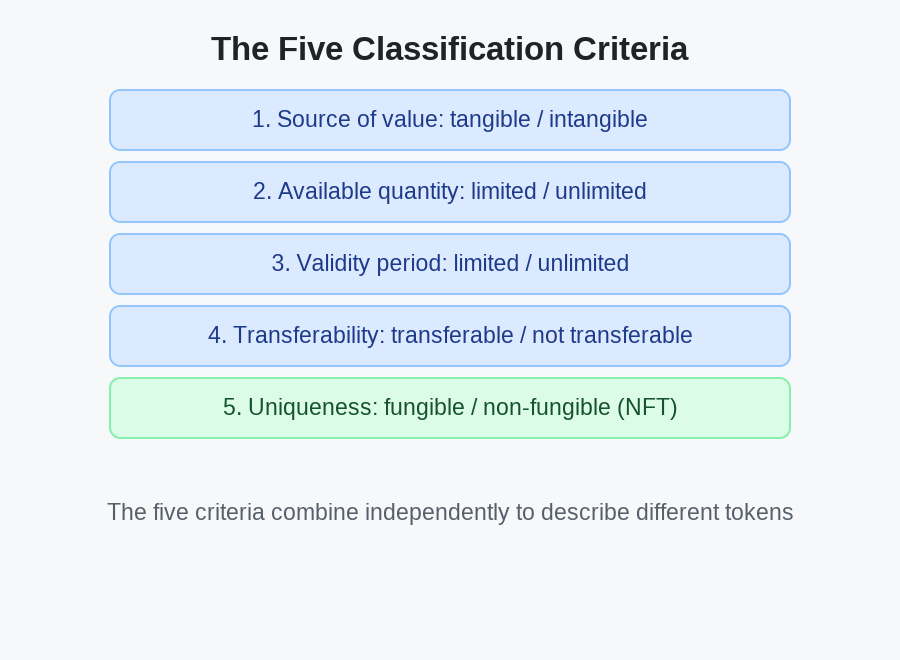
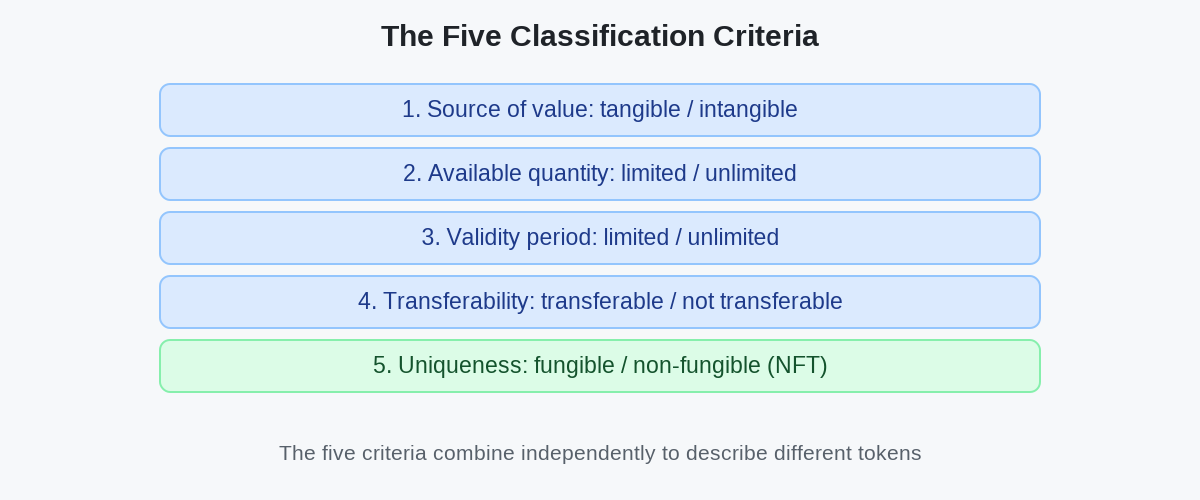
3.4 The Five Classification Criteria
Source of value. Does the token stand for tangible or intangible value? Real estate and company shares are tangible. Copyrights and trademarks are intangible.
Available quantity. Is the quantity limited or unlimited? Seats in a concert hall come in a limited number. Driver's licenses, diplomas, and passports can be issued without end, with no upper limit set in advance.
Validity period. Does it have a fixed expiration date, or does it last indefinitely? Event tickets and passports expire. Real estate, company shares, and fund units can stay valid for the long term.
Transferability. Can you hand it over to someone else? Driver's licenses, passports, and academic credentials are usually tied to one person and can't be transferred. Real estate, funds, and company shares usually can.
Uniqueness / fungibility. Fungible tokens are interchangeable, like currency, fund units, and company shares. Non-fungible tokens (NFTs) stand for unique objects, like a particular work of art, a particular seat, or a particular passport.
3.5 What an NFT Is
An NFT is a non-fungible token. Each NFT stands for a unique object and can't be freely swapped for another NFT.
Examples include:
- A particular piece of digital art.
- A specific part of an image.
- A ticket for a particular movie, date, and seat.
- Personal documents like driver's licenses and passports.
NFTs can stand for uniqueness, but that doesn't automatically make them good investments. Just because some digital artworks have sold for high prices doesn't mean every NFT is worth investing in.
3.6 Purpose-Based Categories — and Their Problems
Common categories based on purpose include:
- Utility tokens: access to a product or service.
- Security tokens: standing for company equity, real estate, or other financial assets.
- Payment tokens: serving as a way to pay.
- Governance tokens: standing for voting rights in a project's decisions.
This way of classifying is useful, but it has problems:
- There are too many kinds of purposes to list them all.
- What a smart contract is meant for and what it's actually used for can differ.
- Categories can overlap. A token might be both a security token and a payment token.
So be careful with classifying by purpose. It easily leads to ambiguity.
3.7 Why "Divisible Tokens" Are Controversial
Some people split tokens into "divisible" and "indivisible." But by this course's definition, a token is a compact object, and dividing it destroys its value as a token. The cut banknote is the example.
So the phrase "divisible token" may contradict itself. Splitting a balance in your account into smaller units is more like dividing a digital balance than cutting "one token" into pieces.
3.8 Do Cryptocurrencies Count as Digital Tokens?
A lot of people's gut answer is "yes." But look closely, using this course's definition:
- Cash banknotes are physical tokens. You can't make change by cutting them.
- Money in a bank account isn't a token. It's a digital balance that can be split up and transferred.
- Most cryptocurrencies can be split up and transferred however you like, so they act more like "on-chain bank deposits" than indivisible digital coins.
So by this course's definition, many cryptocurrencies are more like blockchain-based "bank deposits" than digital tokens. You'd only get a different answer with a definition that allows "divisible tokens."
3.9 The Value and Boundaries of Tokenization
Tokenization can draw on the strengths of distributed systems:
- Resilience.
- Availability around the world.
- No dependence on middlemen.
- Censorship resistance.
But it also raises questions about law, taxes, and consumer protection. The classification criteria exist precisely to help decide which regulations apply, how taxes get reported, and how consumers are protected.
4. Diagrams
Figure 4-4-1: Physical Tokens and Digital Tokens
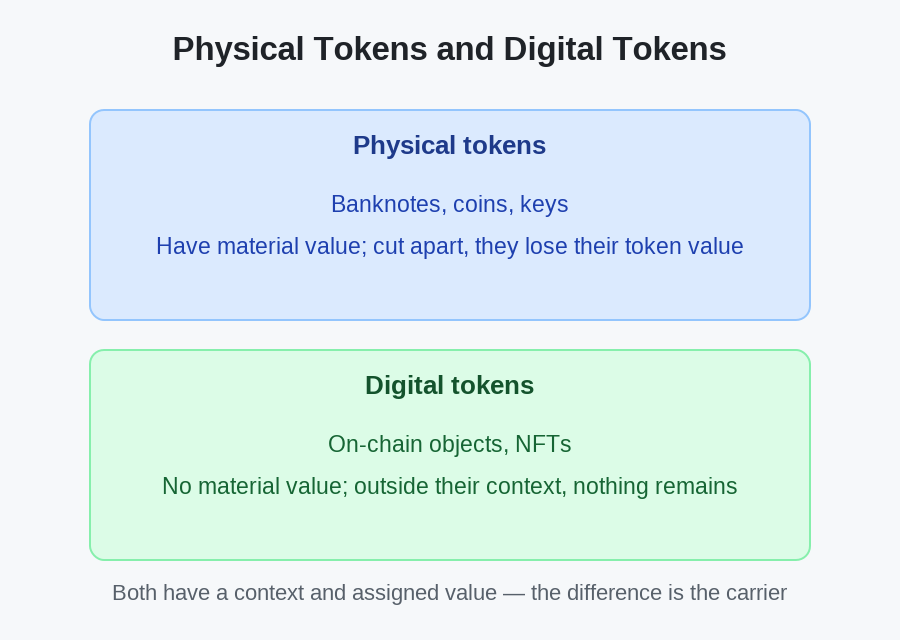
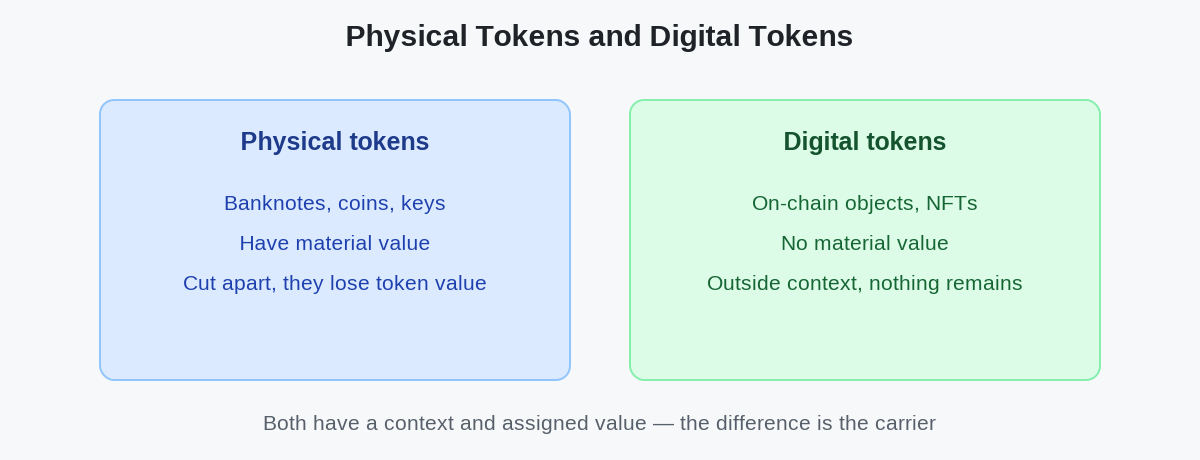
Figure 4-4-2: The Five Classification Criteria
5. Key Takeaways
- A token is a compact object with an assigned value in a specific context.
- Physical tokens have material value. Digital tokens don't.
- Tokenization means creating tokens and managing their ownership, and it's an economic question first.
- The five classification criteria: source of value, available quantity, validity period, transferability, and uniqueness.
- Fungible tokens are interchangeable. Non-fungible tokens (NFTs) stand for unique objects.
- An NFT isn't automatically a good investment.
- Classifying by purpose is useful but tends to overlap and create ambiguity.
- By this course's definition, tokens are indivisible, and most cryptocurrencies are more like on-chain bank deposits than digital tokens.
6. Quiz
Part 1: Single Choice (1–4)
Question 1
What's the most basic difference between physical and digital tokens?
A. They use different media, and digital tokens have no material value
B. Physical tokens have no context of use
C. Digital tokens can't represent value
D. Physical tokens can't be transferred
Show answer
Answer: A
Explanation: The media are different, and digital tokens have no material value. Both kinds can have a context of use and a value.
Question 2
Which of these is a token with a "limited available quantity"?
A. A driver's license
B. A seat at a particular concert
C. A passport
D. A diploma
Show answer
Answer: B
Explanation: Concert hall seats come in a limited number. Driver's licenses, passports, and diplomas can be issued without end, with no upper limit set in advance.
Question 3
What's the core characteristic of an NFT?
A. Each token stands for a unique object and can't be freely swapped
B. Every NFT is guaranteed to go up in value
C. NFTs have to be currency
D. NFTs can't represent tickets
Show answer
Answer: A
Explanation: An NFT stands for a unique object and can't be freely swapped. It isn't guaranteed to go up in value, and it isn't necessarily currency.
Question 4
By this course's definition, what are most cryptocurrencies more like?
A. Indivisible digital coins
B. Divisible on-chain bank deposits
C. Physical banknotes
D. Non-transferable certificates
Show answer
Answer: B
Explanation: By this course's definition, most cryptocurrencies can be divided and transferred, so they're more like on-chain bank deposits than indivisible digital coins.
Part 2: Multiple Choice (5–7)
Question 5
Which of these are classification criteria for digital tokens?
A. Source of value
B. Available quantity
C. Validity period
D. Transferability and uniqueness
Show answer
Answer: A, B, C, D
Explanation: All four are classification criteria.
Question 6
Which statements about NFTs are correct?
A. NFTs stand for unique objects
B. NFTs can represent artworks, seats, or passports
C. NFTs aren't automatically good investments
D. All NFTs can be traded for one another at equal value
Show answer
Answer: A, B, C
Explanation: NFTs are unique, can represent many kinds of objects, and aren't guaranteed to be good investments. D contradicts the definition of an NFT.
Question 7
Which statements about tokenization are correct?
A. Tokenization is an economic question first
B. Blockchains can help manage who owns tokens
C. Tokenization raises questions about law, taxes, and consumer protection
D. Tokenization only applies to currency
Show answer
Answer: A, B, C
Explanation: Tokenization is an economic question, blockchains manage ownership, and legal and tax questions come along with it. It isn't limited to currency.
Part 3: True or False (8–9)
Question 8
True or false: after a banknote is cut in half, each half is still worth half the original face value.
Show answer
Answer: False
Explanation: A cut banknote loses its value as a token. Neither half is worth half the original face value.
Question 9
True or false: classifying tokens by purpose can lead to overlap and ambiguity, because one token may serve several purposes at once.
Show answer
Answer: True
Explanation: Purpose categories can overlap. For example, a security token may also work as a way to pay.
Part 4: Scenario Analysis (10)
Question 10
A team wants to issue two kinds of tokens:
- One that stands for a fixed seat at a particular concert.
- One that stands for general-purpose points you can redeem for services on a platform.
Answer the following:
- How do the two tokens differ in "uniqueness"?
- Which one is closer to a fungible token, and which one to a non-fungible token?
- What other classification criteria should the team think about when it issues them?
Show answer
Answer:
- The fixed-seat token is unique, since every seat is different. The general-purpose points all belong to one class and are interchangeable.
- The seat token is closer to an NFT. The general-purpose points are closer to a fungible token.
- The team should also think about the source of value, available quantity, validity period, and transferability, plus questions about law, taxes, and consumer protection.