
A Blockchain Primer › Module 3 › Lesson 3.4
Lesson 3.4: Why Does Maintaining the Ledger Cost Money? — Transaction Fees, Block Rewards, and Native Cryptocurrencies
- #1. The Core Question
- #2. An Everyday Analogy
- #3. Core Concepts Explained
- #4. Diagrams
- #5. Key Takeaways
- #6. Quiz
The last lesson showed how nodes settle on one authoritative chain. But maintaining the ledger eats up computing power, time, and money. This lesson takes on the next questions: who pays those costs, and why might a blockchain need a currency of its own?
1. The Core Question
Solving hash puzzles burns a lot of electricity, and validating transactions takes resources too. Why would nodes bother doing this work? And if you paid them in ordinary money, wouldn't that undercut the system's openness and distributed nature?
This lesson answers three questions: How are the costs of maintaining the ledger covered? What's the difference between transaction fees and block rewards? And why do "blockchain native cryptocurrencies" exist?
The short version: Integrity isn't free. The system needs a reliable, open, distributed way to pay the nodes that maintain the ledger, and a native digital cryptocurrency is exactly the right tool for the job.
2. An Everyday Analogy
A Bakery That Pays Its Workers in Bread
Picture a bakery that decides to pay its employees in bread. It saves cash and gets rid of the loaves that didn't sell.
Now picture every company doing the same: car factories paying in cars, builders paying in houses. What the workers get is definitely valuable, but they can't always use it to pay rent, buy groceries, or cover tuition.
Only one kind of institution avoids this problem: the one that makes money itself, like a central bank. It can pay its employees in the very money it creates.
A blockchain runs into a similar problem. It has to pay the people who maintain it, but it can't just pick any payment tool. The wrong choice would undercut the system's openness, its distributed nature, and even trust in the system itself.
3. Core Concepts Explained
3.1 Why Integrity Has to Be Paid For
Maintaining the ledger isn't free:
- Solving hash puzzles uses up computing power and electricity.
- Validating transactions, storing the ledger, and spreading blocks all take resources.
- Nodes also carry the costs of getting attacked, making mistakes, and losing the competition.
Without compensation, nodes have no reason to keep doing this work. A blockchain's rewards and penalties only work if "maintaining integrity pays off."
3.2 Transaction Fees and Block Rewards
Nodes earn their income from two main sources.
Transaction fees. Each transaction can carry a fee, paid to the system. Once a block is accepted, the node that packed those transactions into it collects the fees.
Block rewards. A node that creates a new block can receive newly created cryptocurrency. This doesn't come from the sender of any transaction. It's brand-new units that the system generates through a "money creation transaction."
Block rewards get paid even when there are no transactions, so there's always a reason to keep producing blocks. Fees, on the other hand, depend on how much transaction activity there actually is.
3.3 The Payment Tool Affects the System Itself
What you pay nodes with directly affects four key aspects of the blockchain.
Integrity. If the payment tool itself can't be trusted or loses value fast, nodes won't want to keep maintaining the system, and integrity suffers.
Openness. If the payment tool is only available in certain countries, or is subject to capital controls, a lot of nodes simply can't take part.
Distributed nature. If a single central institution controls the payment tool, central control sneaks back into the system "through the back door," by way of the payment tool.
The system's philosophy. A system that claims to be fully open and purely distributed loses credibility if it pays with a tool that goes against its own values.
3.4 What an Ideal Payment Tool Should Offer
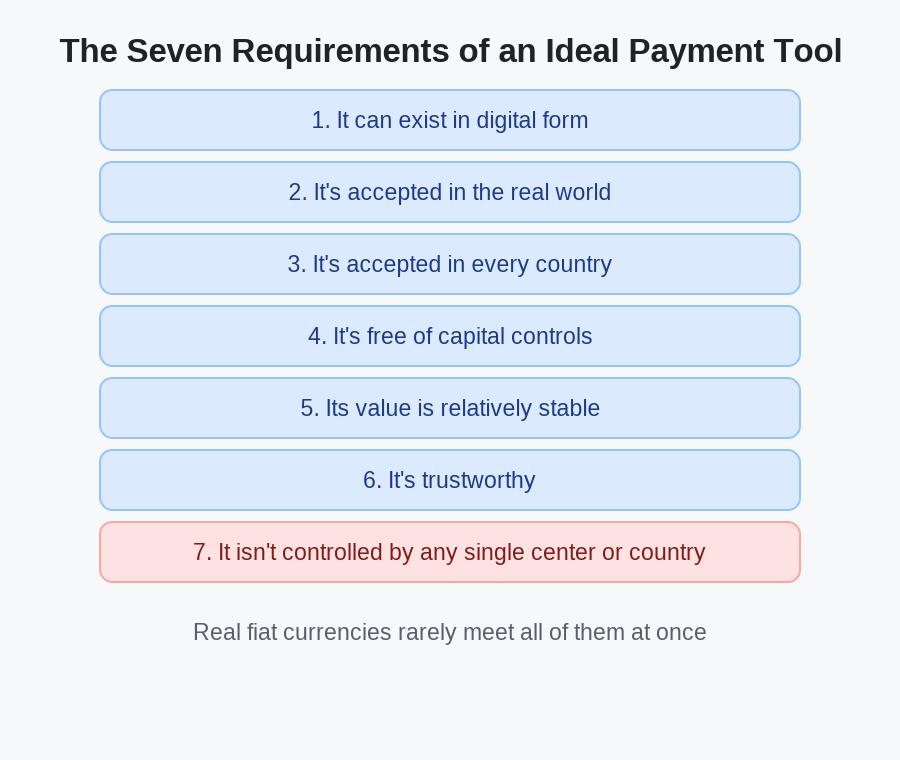
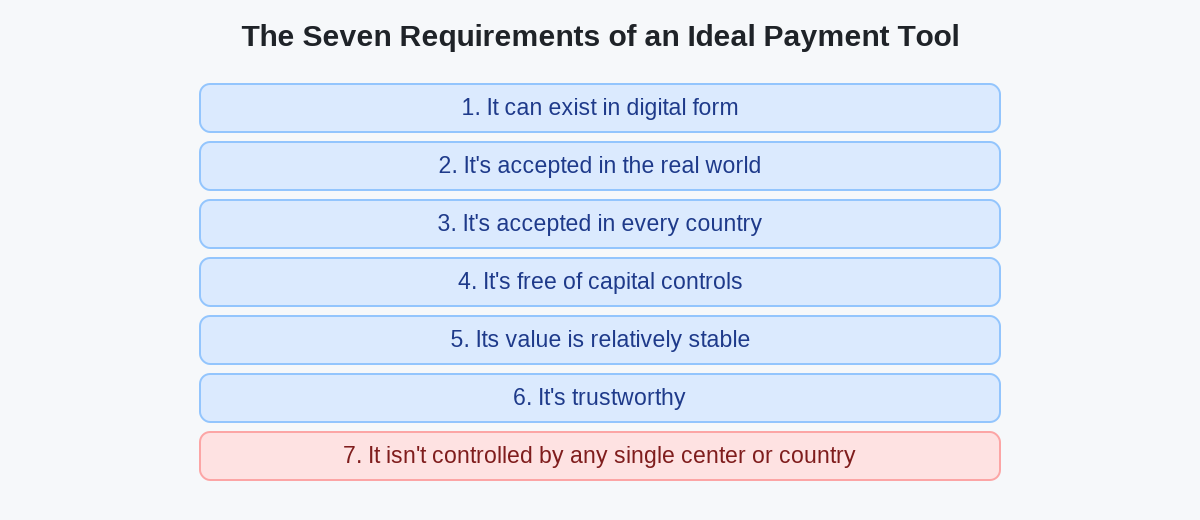
To avoid undercutting the blockchain's goals, the payment tool should ideally meet these conditions:
- It can exist in digital form. Otherwise, it can't be written into the blockchain.
- It's accepted in the real world. Otherwise, nodes can't pay their bills with what they earn.
- It's accepted in every country.
- It's free of capital controls.
- Its value is fairly stable.
- It's trustworthy.
- No single central organization or country controls it.
This list reads almost like the spec for an "ideal world currency." Real-world fiat currencies usually can't meet all of these at once, so blockchains have to look for another answer.
3.5 Creating Its Own Digital Currency
One natural direction is to have the blockchain create a digital currency that exists only inside the system, and use it to pay the people who maintain it.
That solves several problems at once:
- The asset the system manages is ownership of this digital currency.
- The asset that transactions transfer is units of this digital currency.
- Transaction fees are paid in it.
- Block rewards are paid in it too.
At this point, the currency isn't just an application of the blockchain anymore. It becomes part of the blockchain technology suite itself. It's called a blockchain native cryptocurrency.
3.6 Money Creation Transactions
New units can't just appear out of nowhere inside ordinary transactions. That would break the ledger's consistency. Instead, the system uses a special kind of transaction to create money:
- There's no sender account, only a recipient account.
- The system's rules set the amount.
- Since there's no sender, no sender signature is needed.
The node that creates a new block can include one of these "money creation transactions" in the block and credit the new units to any recipient account it picks. That's how the block reward is tied to producing blocks.
It's also why money creation stays part of the transaction logic, and isn't a sneaky way to edit balances behind the ledger's back.
3.7 Rules for the Size of the Block Reward
The system's rules can set how much new currency each block creates. Some possible schemes:
- A fixed amount.
- Proportional to the block's difficulty: the harder the block, the more gets created.
- Proportional to the block's position in the chain: the later the block, the more gets created.
- Inversely proportional to its position: the later the block, the less gets created.
Real systems pick one of these or combine them. Bitcoin, for example, cuts its block reward in stages as the block height grows. Every fixed number of blocks, the reward drops by half, an event known as the "halving."
3.8 The Native Currency and Double-Spending
If this currency pays for fees and rewards, its ownership has to be managed reliably. Otherwise, the same money could be spent twice, the currency would lose its value, and the whole incentive system would fall apart.
So a native cryptocurrency isn't a "free bonus." It's part of the system's integrity. The ledger has to keep track of its ownership reliably, and its transfers have to be protected against double-spending.
4. Diagrams
Figure 3-4-1: Fees, Block Rewards, and Maintenance Costs
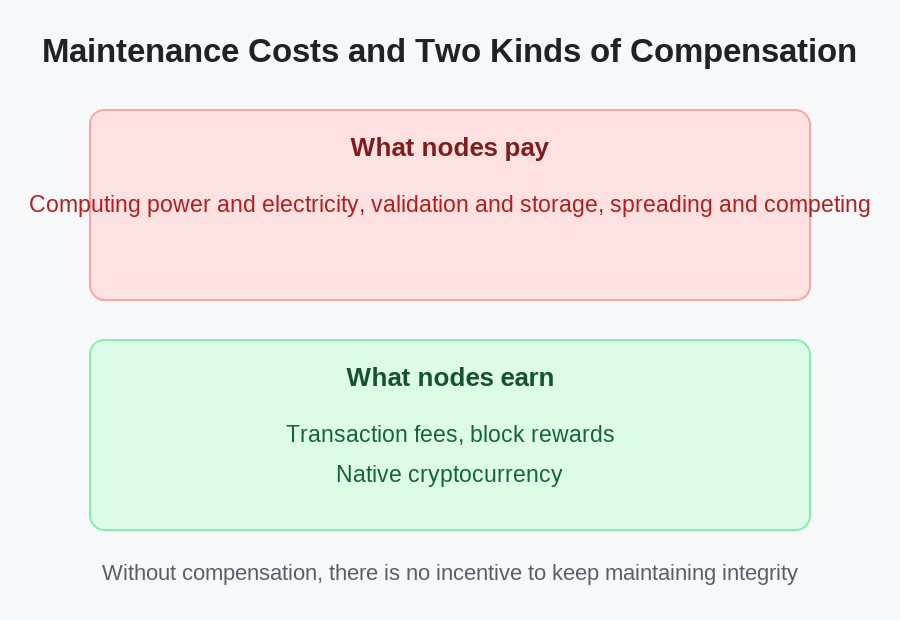
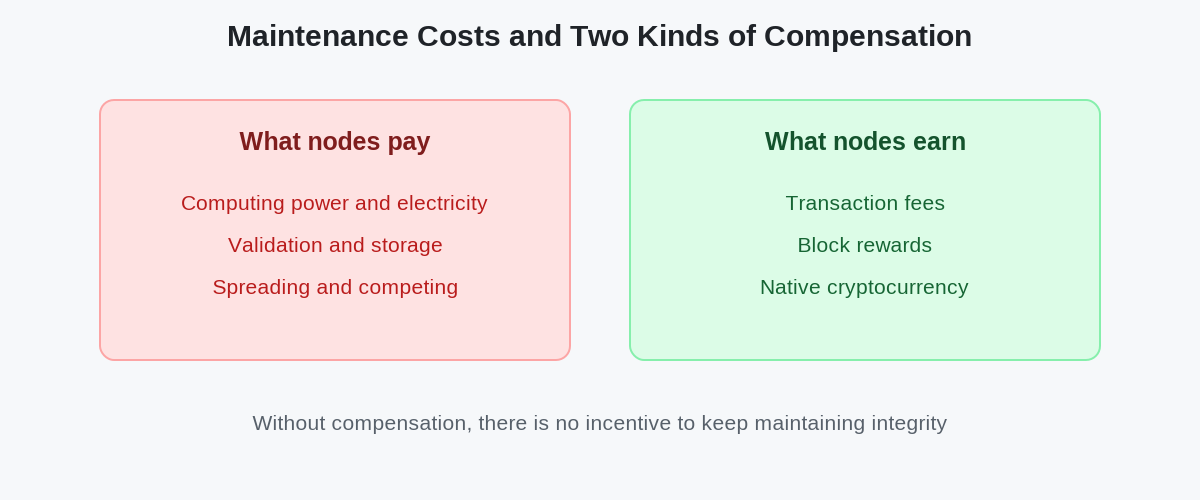
Figure 3-4-2: The Seven Requirements of an Ideal Payment Tool
5. Key Takeaways
- Maintaining integrity takes computing power, time, and resources. It isn't free.
- Transaction fees come from transactions. Block rewards come from currency the system newly creates.
- The payment tool affects integrity, openness, the distributed nature, and the system's philosophy.
- An ideal payment tool is digital, usable in the real world, accepted everywhere, stable in value, trustworthy, and free of single-center control.
- Real fiat currencies rarely meet all these conditions at once, so a blockchain may create its own native cryptocurrency.
- The native cryptocurrency both manages ownership and pays for maintenance, which makes it part of the system and not just an application.
- Money creation transactions have no sender, the system sets their amount, and they need no signature.
- Block reward rules can vary. Bitcoin uses periodic halvings.
6. Quiz
Part 1: Single Choice (1–4)
Question 1
Why does maintaining a blockchain ledger need to be paid for?
A. Because nodes have to buy domain names
B. Because solving hash puzzles, validating, and storing all use up resources
C. Because every node has to pay a fee to get online
D. Because transaction data can't be stored
Show answer
Answer: B
Explanation: Maintaining the ledger uses computing power to solve puzzles, plus resources for validation and storage, so it needs to be paid for. Domain names, getting online, and storing transactions aren't the core reasons.
Question 2
What's the main difference between block rewards and transaction fees?
A. Block rewards are paid in currency the system newly creates, while fees come from transactions
B. Block rewards can only be paid in US dollars
C. Fees don't need any ledger record
D. Block rewards are only paid when there are no transactions
Show answer
Answer: A
Explanation: The system generates block rewards through money creation transactions, while fees come from transactions. Both are part of the ledger logic, and block rewards aren't paid "only when there are no transactions."
Question 3
If a single central institution controls the payment tool, which aspect of the blockchain takes the most direct hit?
A. Its distributed nature
B. Its font style
C. Its image dimensions
D. Its file extensions
Show answer
Answer: A
Explanation: A payment tool controlled by a single center brings central control into the system, which directly conflicts with its distributed nature.
Question 4
What does a money creation transaction typically look like?
A. It has no sender account, and the system sets the amount
B. It has both a sender and a recipient, and the user chooses the amount
C. Every node has to sign it
D. It can only create fiat currency
Show answer
Answer: A
Explanation: Money creation transactions have no sender, and the system's rules set the amount, so no sender signature is needed.
Part 2: Multiple Choice (5–7)
Question 5
Which properties should an ideal payment tool have?
A. Digital form and real-world usability
B. Usable in every country and free of capital controls
C. Stable value and trustworthiness
D. Controlled by a single central institution
Show answer
Answer: A, B, C
Explanation: The ideal tool is digital, global, stable, and trustworthy. D conflicts with the distributed philosophy.
Question 6
Which aspects of a blockchain does the choice of payment tool affect?
A. Integrity
B. Openness
C. Distributed nature
D. The system's philosophy
Show answer
Answer: A, B, C, D
Explanation: The payment tool affects integrity, openness, the distributed nature, and the system's philosophy.
Question 7
Which statements about native cryptocurrencies are correct?
A. The blockchain ledger manages their ownership
B. They're used to pay transaction fees and block rewards
C. They can become part of the blockchain technology suite
D. They have nothing to do with the ledger's integrity
Show answer
Answer: A, B, C
Explanation: The native cryptocurrency manages ownership, pays for maintenance, and can become part of the technology suite. D says the opposite of what it does.
Part 3: True or False (8–9)
Question 8
True or false: block rewards come from the sender account of some ordinary transaction.
Show answer
Answer: False
Explanation: Block rewards come from currency the system newly creates, not from the sender account of an ordinary transaction.
Question 9
True or false: if the native cryptocurrency could be double-spent, the whole incentive system would be badly damaged.
Show answer
Answer: True
Explanation: If the native currency could be double-spent, it would lose its value, which would damage both node compensation and trust in the system.
Part 4: Scenario Analysis (10)
Question 10
A team wants to design a public blockchain that pays node rewards in one country's fiat currency. That currency circulates in only a few countries, and cross-border transfers are restricted.
Answer the following:
- How does this affect the system's openness?
- Why might it also affect the system's distributed nature?
- What alternative could the team consider?
Show answer
Answer:
- A fiat currency that circulates in only a few countries and has restricted cross-border transfers makes it hard for nodes in many regions to take part, which limits the system's openness.
- If a single central institution controls that fiat currency, central control enters the system through the payment tool, which undercuts its distributed nature.
- The team could design a native digital cryptocurrency inside the system to pay transaction fees and block rewards, and make sure the ledger manages its ownership reliably and protects it against double-spending.