
A Blockchain Primer › Module 1 › Lesson 1.2
Lesson 1.2: From One Machine to a Network — Centralized, Distributed, and Peer-to-Peer
- #1. The Core Question
- #2. An Everyday Analogy
- #3. Core Concepts Explained
- #4. Diagrams
- #5. Key Takeaways
- #6. Quiz
In the last lesson, you learned to take a system apart with four questions. This lesson zooms out. The same user-facing features can run on one central machine, on a group of connected machines, or even on a network where every user becomes a node. Once you can tell these three setups apart, you'll know where blockchain fits.
1. The Core Question
Why can the same payment feature run on completely different systems underneath? What actually separates centralized, distributed, and peer-to-peer? And why does blockchain land in the distributed camp?
The short version: Architecture decides how the parts of a system are organized and who calls the shots. Peer-to-peer goes one step further and turns every participant into both a user and a provider. Blockchain is the tool a pure distributed peer-to-peer system uses to maintain integrity.
2. An Everyday Analogy
Two Cars That Look Identical Can Drive Completely Differently
When you buy a car, the body can look exactly the same while the engine runs on diesel, gasoline, or electricity. Two cars that look identical can drive completely differently:
- They have different power and a different feel on the road.
- They cost different amounts to buy and to run.
- Even the fuel, exhaust, and braking systems that go with the engine can differ.
This idea is called modularity: you can swap out one part of a system and the whole thing still works. In software, the features users see are the car's body. The way things are organized underneath, which is what actually makes those features run, is the engine.
In the terms from the last lesson:
- The features users work with directly are the user side.
- The technical setup that makes those features happen is the back-end side.
- The way the parts are organized and connected is the software architecture.
So choosing an architecture doesn't change what features users want. It does change cost, reliability, complexity, and how the system maintains integrity. Blockchain isn't a new feature on the screen. It's a back-end tool, and its specific job is to help a distributed architecture get integrity right.
From "Buying CDs" to "Users Sharing Directly"
Now zoom out from one machine to a whole network. Listening to music used to mean going through record labels, distributors, and stores. Middlemen stood between the people who made music and the people who listened to it. Then music went digital. Recording got cheap, songs became files, and users could pass them straight to one another.
The big story isn't that music became files. It's that the middle steps got skipped. Once creators and users can handle production, distribution, and access on their own, the businesses that made money from sitting in the middle take a hit.
Napster, an early music-sharing program, is a good example. Users could send files directly to each other, but Napster still ran a central directory that tracked which nodes had which songs. That made it centralized peer-to-peer, not pure distributed peer-to-peer with no center at all. You'll see this distinction again and again.
3. Core Concepts Explained
3.1 Software Architecture: How Components Are Organized and Connected
Software architecture describes how a system's parts are organized and how they connect to each other. These parts are usually called components. Architecture diagrams often draw them as circles, and they're also called nodes.
Architecture isn't about what the buttons look like. It's about which parts carry the system's work and how those parts relate to each other.
3.2 Centralized: One Central Machine Calls the Shots
A centralized architecture builds the whole system around one central component:
- Every other component connects to the center.
- The outer components usually don't connect to each other directly.
- Coordination and control sit at the center.
This setup is easy to understand, and it's always clear who's in charge. The price is that the center becomes the weak spot. If the center fails, the whole system may grind to a halt along with it.
3.3 Distributed: A Group of Machines Cooperating, with No Commander-in-Chief
A distributed architecture is a set of independent computers that talk to each other and work toward the same goal, with no center in overall control.
Two clarifications:
- Not every pair of nodes has to be directly connected. Any two nodes just need some path, direct or indirect, to reach each other.
- "Distributed" describes how a system is organized and controlled. It doesn't just mean "lots of computers."
3.4 The Four Benefits of Distributed Systems
More computing power. A distributed system's total computing power is the sum of every connected computer's power. Enough ordinary computers working together can outperform a single supercomputer.
Lower overall cost. A distributed system needs many machines, so it costs more up front than one ordinary computer. But the fair comparison is a supercomputer with the same computing power. Building and maintaining a large supercomputer usually costs far more than a distributed system, and replacing one ordinary machine in the group barely makes a dent.
Higher reliability. When one machine crashes, the others keep running and pick up its work. No single node can take down the whole system.
Natural growth. Need more computing power? Connect more computers. Capacity grows a little at a time instead of forcing you to replace everything at once.
3.5 The Five Costs of Distributed Systems
With nobody in central command, the members have to coordinate among themselves. That's where the costs come from:
- Coordination overhead: figuring out who does what, in what order, and how to settle conflicts takes effort that could have gone into the actual work.
- Communication overhead: coordination runs on messages, and sending, receiving, and processing messages between computers all use up resources.
- Dependency on networks: network delays, outages, and congestion directly affect how well the machines work together. No network, no distributed system.
- Higher program complexity: on top of solving the business problem, the software also has to handle coordination, communication, and networking.
- Security issues: data moving across the network can be intercepted or misused by parties you can't trust.
3.6 Peer-to-Peer: Every Node Both Gives and Takes
A peer-to-peer network is a special kind of distributed system. Its computers are called nodes, and each node can offer computing power, storage, data, or network bandwidth directly to other members while also using what others offer.
It has three defining traits:
- There's no central coordination point.
- Nodes have equal rights and equal roles.
- Every node can both provide resources and use them.
When you join a peer-to-peer system, your computer stops being just a "client." It becomes a node in the network. Peer-to-peer apps have shown up in file sharing, content distribution, and privacy protection.
3.7 Peer-to-Peer Doesn't Mean No Center at All
This is the most important distinction in this lesson. Peer-to-peer is distributed, of course, because resources are spread across many nodes. But "peer-to-peer" doesn't automatically mean "no center of any kind."
It comes in two common forms:
Centralized peer-to-peer: nodes can exchange data directly, but the system keeps a central node that helps nodes find each other, maintains a directory, and handles lookups or identification. Napster falls into this category.
Pure distributed peer-to-peer: there's no central control or coordination at all. Every node handles the same kinds of tasks, and every node is both a provider and a user.
If you confuse "peer-to-peer transfer" with "no center at all," you'll wrongly classify Napster as a pure distributed system.
3.8 Disintermediation: Why Peer-to-Peer Can Shake Up an Industry
Peer-to-peer's most direct advantage is that it lets the two sides of a transaction deal with each other directly, instead of both going through the same middleman. Replacing middlemen with direct connections is called disintermediation.
Why does it pack such a punch?
- Shorter paths: every institution you cut out of the chain is one less round of waiting and processing.
- Lower costs: the fees that the middle steps charge may shrink.
- More direct connections: producers and consumers can find each other, trade, and work together on their own.
But peer-to-peer won't automatically take over every industry. The most exposed industries share all of these traits: what they sell is mostly digital and intangible, copying and sending it is cheap, and most of the existing value is held by middlemen. Highly digital fields like music, finance, identity records, certificates, and contracts all face the same kind of structural pressure.
Still, having potential isn't the same as being inevitable. Real-world trust, rules, legal liability, and user habits all shape how things end up.
3.9 Where Blockchain Fits in This Story
Pure distributed peer-to-peer systems face a hard problem. With no central management, how can lots of nodes that don't know each other, let alone trust each other, keep one reliable set of data together?
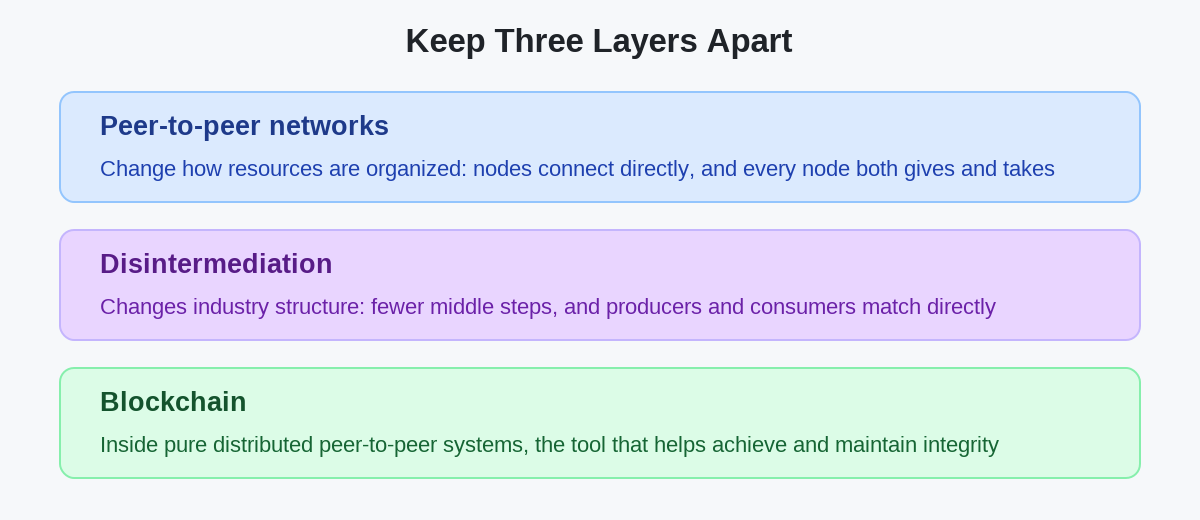
That's exactly where blockchain comes in. Keep these three layers separate:
- Peer-to-peer networks change how resources are organized and let nodes connect directly.
- Disintermediation changes how an industry is structured and shrinks the middle steps.
- Blockchain is a tool that helps a pure distributed peer-to-peer system achieve and maintain integrity.
Most of the real excitement comes from the industry shake-up that the first two layers bring. Blockchain is one of the technical tools that lets that shake-up run reliably.
4. Diagrams
Figure 1-2-1: From Centralized to Pure Distributed Peer-to-Peer
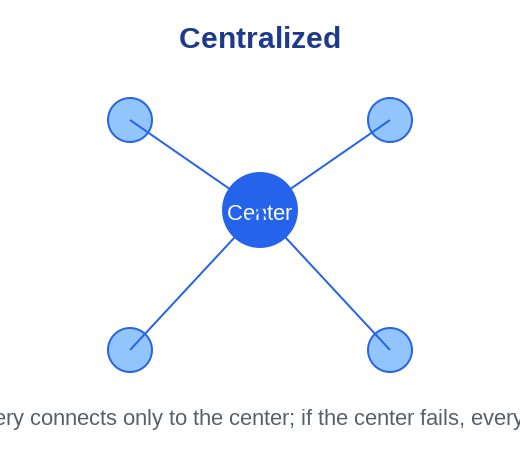
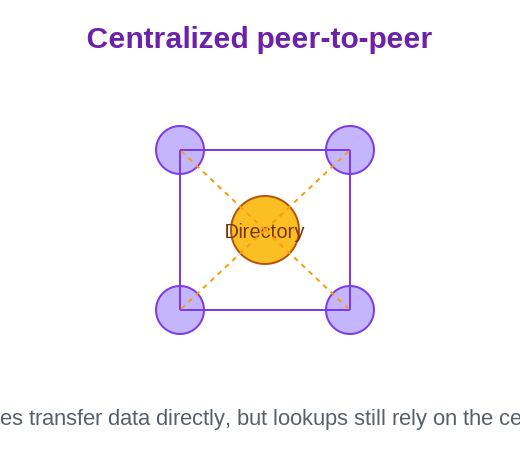
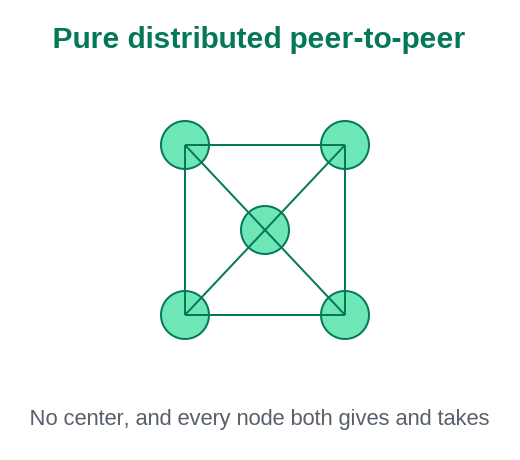
Figure 1-2-2: The Four Benefits and Five Costs of Distributed Systems
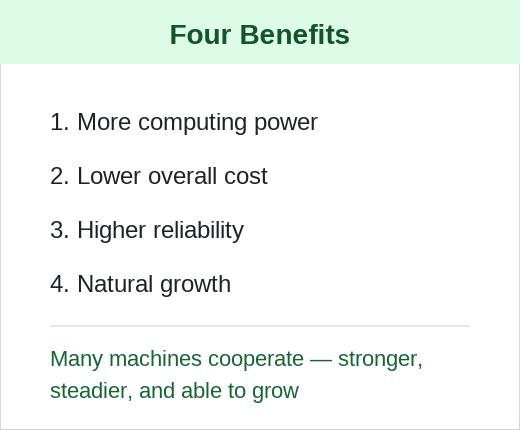
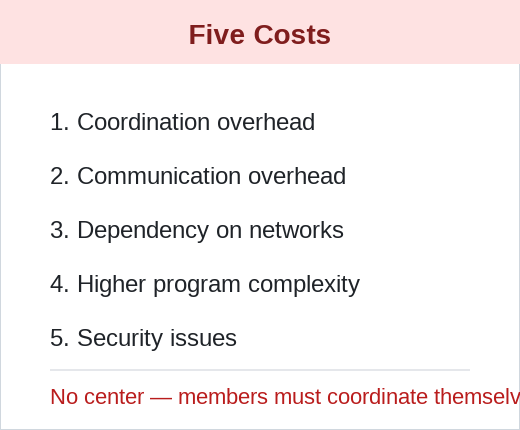
Figure 1-2-3: How Peer-to-Peer, Disintermediation, and Blockchain Relate
5. Key Takeaways
- Architecture decides how components are organized and connected. The same application-layer features don't mean the same back-end architecture.
- Centralized systems revolve around a center. The center is the key control point. If it breaks, everything may stop.
- Distributed systems have no central control. Nodes don't all need direct connections to each other. What matters is whether there's a single point of control.
- Four benefits of distributed systems: more computing power, lower overall cost, higher reliability, and natural growth.
- Five costs of distributed systems: coordination overhead, communication overhead, dependency on networks, higher program complexity, and security issues.
- Peer-to-peer: nodes offer their own resources directly to other nodes, so each one both gives and takes.
- Peer-to-peer doesn't mean no center: centralized peer-to-peer still has a directory or identity center. Only pure distributed peer-to-peer has no center.
- Blockchain's place: it's the tool a pure distributed peer-to-peer system uses to maintain integrity. It isn't disintermediation itself.
6. Quiz
Part 1: Single Choice (1–4)
Question 1
Two cars that look identical can have different engines. What point about software is this analogy mainly trying to make?
A. Systems with the same application-layer features can use different back-end architectures
B. As long as the interface looks good, what's underneath doesn't matter
C. Software architecture changes the tasks users want to get done
D. Distributed systems always look better than centralized ones
Show answer
Answer: A
Explanation: Identical car bodies stand for identical application-layer features, and different engines stand for different back-end architectures. The engine also affects price, running costs, and how the car drives, just as architecture affects non-functional requirements.
- B is wrong: having the same features doesn't give the back end permission to ignore reliability and integrity.
- C is wrong: architecture is how you build it. It doesn't change the tasks users want to get done.
- D is wrong: the analogy says nothing about how interfaces look and doesn't prove that any architecture "looks better."
Question 2
Which description of a distributed architecture is most accurate?
A. Every pair of nodes must be directly connected
B. Multiple independent computers work together by communicating, with no central control or coordination
C. Any system with enough computers is automatically distributed
D. All data must be stored on the same central computer
Show answer
Answer: B
Explanation: A distributed system is made up of multiple independent computers that work together over a communication medium, with no central controller or coordinator.
- A is wrong: nodes don't all need direct connections to each other. An indirect path is enough.
- C is wrong: the number of machines isn't the only test. What matters is whether there's central control.
- D is wrong: keeping all data in one center is the hallmark of a centralized architecture.
Question 3
Napster, an early music-sharing program, ran a central directory that tracked nodes and the songs available on them. How is it best classified?
A. A pure distributed peer-to-peer system
B. A centralized peer-to-peer system
C. Not a peer-to-peer system at all
D. A centralized system with no center of any kind
Show answer
Answer: B
Explanation: On Napster, files moved between users, but the central directory handled lookups for nodes and songs. That makes it centralized peer-to-peer, not pure distributed peer-to-peer.
- A is wrong: pure distributed peer-to-peer has no central directory.
- C is wrong: users could send files directly, which meets the basic definition of peer-to-peer transfer.
- D is wrong: it wasn't purely centralized, because files moved between user nodes instead of being relayed and stored entirely by the center.
Question 4
Which statement best describes where blockchain fits?
A. An application-layer app in charge of interface design
B. The only database in a centralized system
C. A tool that pure distributed peer-to-peer systems use to achieve and maintain integrity
D. A piece of hardware that replaces all network communication protocols
Show answer
Answer: C
Explanation: Blockchain isn't a user-facing, application-layer feature. It's a technical tool on the back end. Its goal is to achieve and maintain integrity, and it does that job inside pure distributed peer-to-peer systems.
- A is wrong: apps and interfaces belong to the application layer.
- B is wrong: "a centralized database" doesn't describe where blockchain fits.
- D is wrong: blockchain isn't network hardware, and it doesn't replace the whole communication medium.
Part 2: Multiple Choice (5–7)
Question 5
Compared with a single computer, which of these are benefits of a distributed system?
A. It can pool the computing power of many computers
B. It costs less overall than a supercomputer with the same capability
C. When one machine crashes, the others can keep working
D. You can add capacity gradually by adding computers
E. It's completely immune to network problems
Show answer
Answer: A, B, C, D
Explanation: These are the four main benefits of distributed systems: computing power, overall cost, reliability, and natural growth.
- E is wrong: distributed systems lean heavily on networks, and network problems directly affect communication and coordination.
Question 6
Which typical costs does a distributed system have to bear?
A. Coordination overhead
B. Communication overhead
C. Dependency on networks
D. Higher program complexity
E. Security issues
Show answer
Answer: A, B, C, D, E
Explanation: All five are typical costs of distributed systems. With nobody in central command, members have to coordinate themselves. Coordination takes communication, which uses resources and depends on networks. The software also has to handle coordination, communication, and networking. And data moving across the network brings security risks.
Question 7
Which statements about peer-to-peer networks are correct?
A. There's no central coordination point
B. Nodes have equal rights and equal roles
C. A node can both provide resources and use them
D. Every node must connect directly to every other node
E. The more nodes join, the more coordination, communication, and security problems disappear on their own
Show answer
Answer: A, B, C
Explanation: Peer-to-peer networks have no central coordination point, nodes have equal rights and equal roles, and every node both provides and uses resources.
- D is wrong: nodes don't need direct connections to every other node.
- E is wrong: more participants don't make coordination, communication, security, or program complexity problems go away on their own.
Part 3: True or False (8–9)
Question 8
True or false: if a system uses peer-to-peer transfer, it must be a pure distributed system with no center of any kind.
Show answer
Answer: False
Explanation: Peer-to-peer only tells you that nodes can exchange resources. It doesn't tell you whether there's a center. Centralized peer-to-peer can still have a directory, lookup, or identity center. Napster is the example.
Question 9
True or false: if two systems give users the same application-layer features, their back-end architectures must be the same too.
Show answer
Answer: False
Explanation: Application-layer features and back-end architecture are separate choices. The exact same payment, storage, or communication features can run on a centralized system or a distributed one. The features users need belong to the application layer. The architecture that makes them run belongs to the back-end side.
Part 4: Scenario Analysis (10)
Question 10
A company launches a file-sharing app:
- Users can send files directly to one another.
- File storage is spread across many users' computers.
- But every login, search, and access-permission request has to go through the company's single authentication server first.
- If that authentication server goes down, nobody can keep using the app.
Is this app a pure distributed peer-to-peer system? Explain your reasoning. Then, looking at coordination, communication, network security, and integrity maintenance, explain why "files are stored in a distributed way" isn't enough on its own to settle the question.
Show answer
Answer: It is not a pure distributed peer-to-peer system.
Reasoning: File storage is spread across many users' computers, but every login, search, and access-permission request goes through one authentication server. If that server goes down, no user can keep going. That meets the test of "a single component can bring the whole system to a halt," so this is centralized peer-to-peer.
Why distributed file storage alone isn't enough:
- Coordination: the authentication server still decides who gets in and what they can do. The center carries the key coordination and authorization work.
- Communication: files may move between user nodes, but login, search, and permission checks still depend on talking to the central server. If that central link fails, the whole flow stops.
- Network security: spreading files out doesn't make access secure. If the central authentication data leaks or someone intercepts the authentication channel, the entire system can still be compromised.
- Integrity maintenance: once files are spread out, the system still has to keep state consistent across nodes, keep access rules consistent, and block unauthorized changes. The authentication center itself becomes a key point that needs extra protection.
The takeaway: a distributed architecture doesn't hand you every benefit automatically, and having lots of nodes is no excuse to overlook central control, communication costs, and security boundaries.