
A Blockchain Primer › Module 1 › Lesson 1.3
Lesson 1.3: What Makes Stranger Nodes Cooperate? — Trust, Integrity, and the Stranger Problem
- #1. The Core Question
- #2. An Everyday Analogy
- #3. Core Concepts Explained
- #4. Diagrams
- #5. Key Takeaways
- #6. Quiz
In the last lesson, you saw how centralized, distributed, and peer-to-peer systems differ, and you learned that blockchain sits in the distributed camp. This lesson goes one step further. When a group of nodes that don't know each other, let alone trust each other, have to keep the same data together, what's the real obstacle?
1. The Core Question
When one company runs one computer and something breaks, you go to the administrator. But when lots of computers that don't know each other are keeping the same data together, who do you go to when something breaks?
The short version: Blockchain isn't trying to solve "how do we store data." It's trying to solve "how do stranger nodes maintain integrity together."
2. An Everyday Analogy
An Old Apartment Complex with No Property Management
Picture an old apartment complex with no property management company and no residents' committee keeping the books. The roof needs repairs, so a few dozen households agree to pool a maintenance fund. The trouble starts right away:
- Some residents are away for months at a time and have no idea where the money went.
- Some are holding ledgers that are already out of date.
- Some might quietly edit their own records and mark shared money as their own.
- And some just had a computer die or a file get corrupted, with no cheating involved.
If there's only one ledger, and it gets torn up, altered, or filled in wrong, it becomes very hard to prove who paid, who didn't, and where the money went.
This apartment complex maps neatly onto a pure distributed peer-to-peer system:
- Each household is a node that trades information directly with the others.
- There's no central body, like a property manager, to make the final call.
- Any household might be online or offline, honest or cheating.
The maintenance fund ledger is the data the system has to keep together. The problem isn't whether anyone can write the numbers down. It's this: when everyone holds a copy, what makes everyone believe all those copies tell the same true story?
From "I Trust This Person" to "I Trust This System"
In everyday life, "trust" usually means trusting people: I trust this boss, this bank, this friend.
But in a peer-to-peer system, users don't know the other nodes and can't check them out one by one. What users really need to believe in isn't any particular stranger's computer. It's this: can the system as a whole keep producing correct, complete, and consistent results?
That's why trust and integrity have to be discussed together.
3. Core Concepts Explained
3.1 Trust and Integrity Are Two Sides of the Same Coin
Integrity describes something the system can do: no data goes missing or comes out wrong, records stay consistent over time, nothing gets corrupted or secretly changed, and the system works as expected.
Trust describes how people feel about the system. Even without all the evidence, and without checking every computer themselves, they're still willing to believe the system is reliable, tells the truth, and does what it's supposed to do. Trust isn't a certificate you get once and keep forever. Results confirm it or wear it down, every time people use the system.
The two form a loop:
- Users join in the first place because they have some basic trust in the system.
- Once they're in, users contribute computing power, storage, data, or bandwidth.
- The system keeps its integrity, and what users actually experience backs up their trust.
- Trust that's been backed up keeps users around and draws in new ones.
It works in reverse, too. If the system keeps losing data, getting results wrong, or getting tampered with, trust drains away. Once users leave, the system has fewer resources, the users who stay have a harder time getting a good experience, and the system eventually withers or shuts down completely.
So integrity isn't just one technical detail among many. It decides whether a peer-to-peer system can survive at all.
3.2 The Two Unknowns That Set the Difficulty
Lots of factors affect whether a peer-to-peer system can maintain integrity, but two matter most:
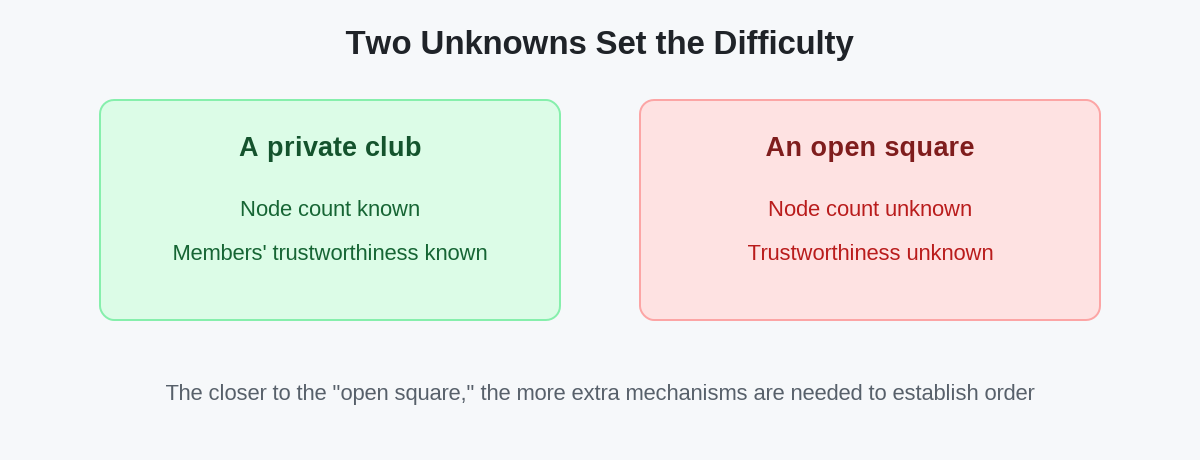
- Do we know roughly how many nodes are in the system?
- Do we know whether those nodes are trustworthy and run reliably?
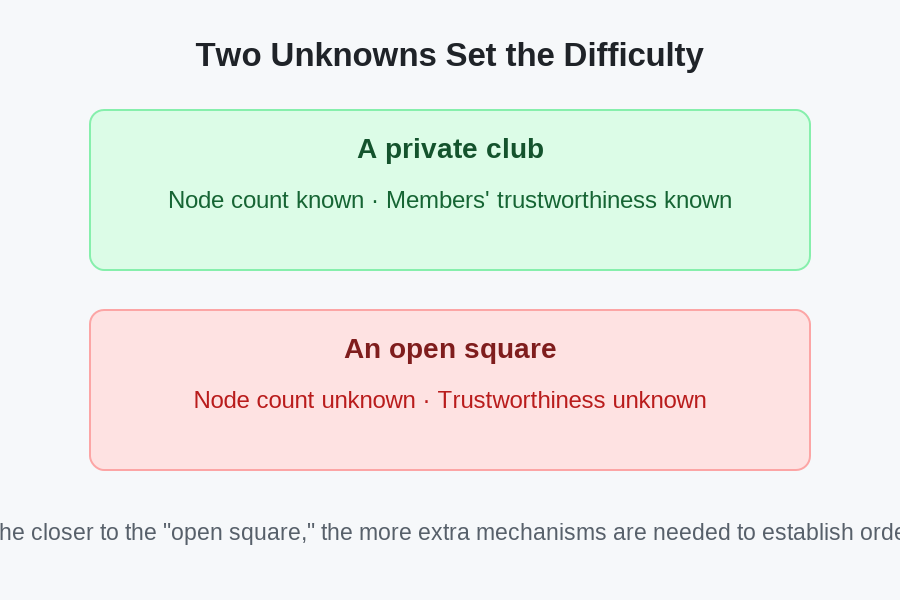
If the number of nodes is limited, members' identities are clear, and joining requires vetting, the system works like a private club. The club knows who its members are, knows who's breaking the rules, can hold people accountable when something goes wrong, and has a much better shot at integrity.
If the system is fully open, so anyone can join at any time, the node count keeps changing, and nobody's identity or motives are clear, the system works like a public square open to everyone. You don't know how many people are there right now or who deserves trust, and maintaining integrity gets much harder.
That's why openness is both what makes peer-to-peer systems appealing and what makes them hard.
3.3 Two Kinds of Troublemakers: Failures and Malice
To keep things manageable, let's focus on the two main threats.
The first is technical failure: hardware breaks, software has bugs, networks drop, disks get corrupted. A node may not be doing anything wrong on purpose. It just got a calculation wrong, lost a message along the way, or didn't update in time. These problems come from the system's own fragility.
The second is the malicious peer: participants who deliberately deceive, tamper, forge, or attack the system to benefit themselves. This isn't a technical failure. It's a problem that comes from people's goals and behavior. What makes a malicious peer so dangerous is that it goes straight at the foundation of trust. Once everyone finds out they can't trust the people they're working with, they stop contributing resources, and the system withers even faster.
The two problems often show up together. If you see a ledger that doesn't add up, maybe a computer broke, or maybe someone changed it on purpose. Without extra ways to check, someone looking from the outside can hardly tell which one it is at a glance.
3.4 An Older Name: The Byzantine Generals Problem
In computer science, the problem of "some participants may be dishonest, but the system still has to produce a joint result everyone can trust" is called the Byzantine Generals Problem.
For now, just remember the name. Here's what it captures: when a group of members who can't fully trust each other need to agree, and some of them may be troublemakers on purpose, how can the system keep a few bad members from leading it astray?
3.5 The Problem Blockchain Really Sets Out to Solve
Put all of these conditions together, and you can state the core problem blockchain solves in one line:
In a pure distributed peer-to-peer system, when you don't know how many nodes there are or whether they're trustworthy and reliable, how do you achieve and maintain the system's integrity?
That line has three key terms:
- Pure distributed: no central body acts as the final referee.
- Peer-to-peer: nodes trade information directly, with no center passing it along.
- Unknown: you don't know how many participants there are or who's reliable.
If you knew the node count and could trust the members, maintaining integrity would be much easier. The real difficulty is the open environment: strangers who come and go at any moment, who might fail, and who might cheat.
4. Diagrams
Figure 1-3-1: Trust and Integrity Support Each Other
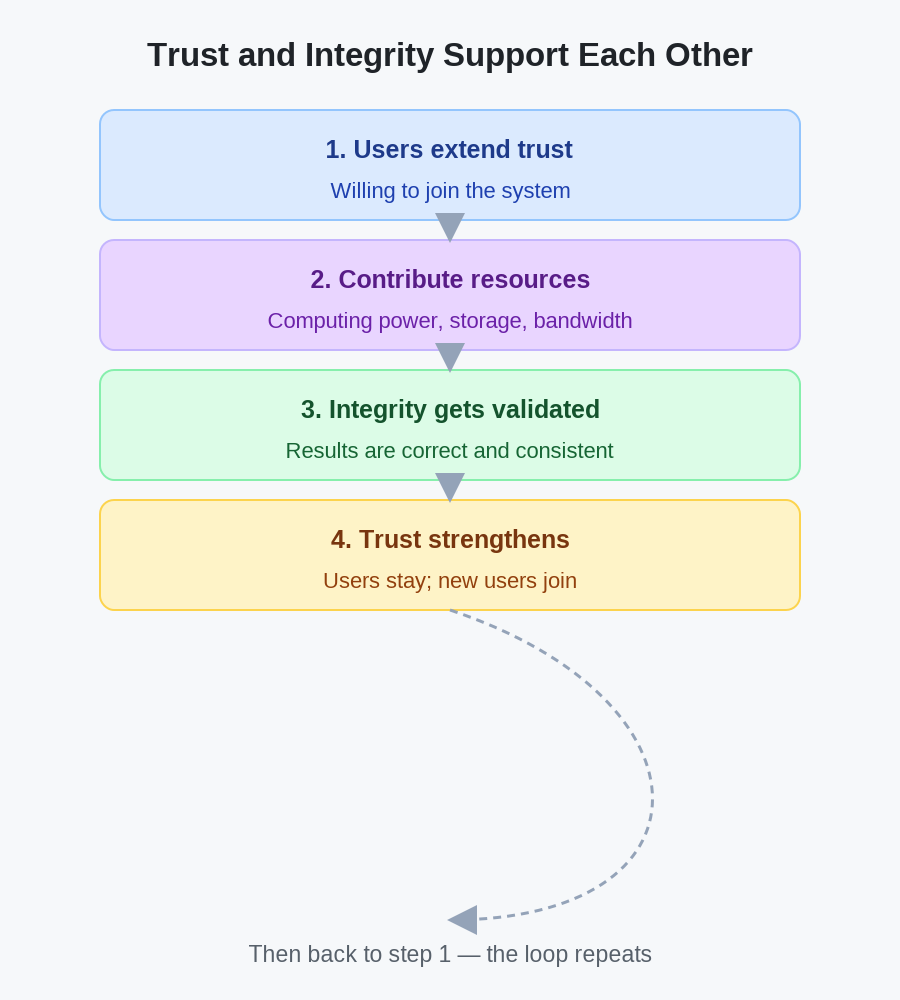
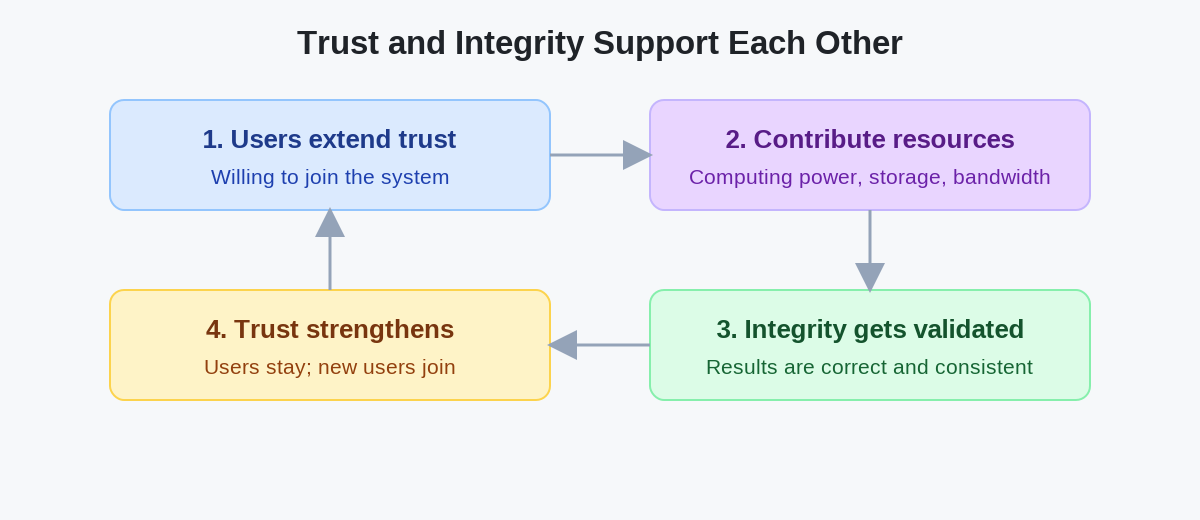
Figure 1-3-2: The Degree of Unknown Sets the Difficulty
5. Key Takeaways
- Integrity is the system's ability to keep data correct, consistent over time, and undamaged. Trust is people's willingness to believe the system will keep doing that.
- Users offer trust first, and the system keeps earning it through integrity. When integrity collapses, trust goes with it.
- The two unknowns that matter most for maintaining integrity: whether you know the node count, and whether you know how trustworthy the nodes are.
- Technical failure comes from the system's fragility. Malicious peers come from participants' interests and behavior. Both can show up at the same time.
- The Byzantine Generals Problem describes this situation: some members may be dishonest, but the system still has to reach a joint result everyone can trust.
- Blockchain's core problem: achieving and maintaining integrity in a pure distributed peer-to-peer system where you know neither the node count nor how trustworthy the nodes are.
6. Quiz
Part 1: Single Choice (1–4)
Question 1
In a peer-to-peer system, which statement comes closest to describing "integrity"?
A. The system has enough users
B. The system keeps producing correct, complete, and consistent results
C. The system has to be run by one big company
D. Every node in the system knows every other node
Show answer
Answer: B
Explanation: Integrity is about whether the system's results are correct, complete, and consistent. How many users there are, who runs the system, and whether nodes know each other aren't part of the definition.
Question 2
Why does an "unknown node count and unknown trustworthiness" make integrity harder to maintain?
A. Because more nodes always means smaller hard drives
B. Because the system can't confirm who's taking part or who deserves trust, and it's hard to hold anyone accountable when something goes wrong
C. Because peer-to-peer systems can't use networks
D. Because unknown nodes are always malicious
Show answer
Answer: B
Explanation: When you don't know the count or the trustworthiness, it's hard to confirm who's taking part, assess risk, hold anyone accountable, and keep things stable. A and C have nothing to do with the question. D confuses "unknown" with "definitely malicious."
Question 3
Which of these is a "technical failure" rather than "malicious behavior"?
A. A node deliberately forges a transfer
B. A node secretly changes its own copy of the ledger
C. A computer's hard drive fails and data is lost
D. A node teams up with other nodes to deceive users
Show answer
Answer: C
Explanation: A failed hard drive is a hardware failure. A, B, and D are all deliberate actions by participants, which makes them threats from malicious peers.
Question 4
What is the central problem blockchain sets out to solve?
A. Making every website distributed
B. Keeping the node count the same forever
C. Maintaining integrity in an open peer-to-peer system
D. Turning every computer into a supercomputer
Show answer
Answer: C
Explanation: Blockchain isn't about making every website distributed or chasing unlimited computing power. Its core job is maintaining integrity in an open peer-to-peer environment full of unknowns.
Part 2: Multiple Choice (5–7)
Question 5
Which factors affect how hard it is for a peer-to-peer system to maintain integrity?
A. Whether you know how many nodes are in the system
B. Whether you know how trustworthy the nodes are
C. Whether nodes can have technical failures
D. Whether nodes might act maliciously to benefit themselves
Show answer
Answer: A, B, C, D
Explanation: Node count, trustworthiness, technical failures, and malicious behavior all affect integrity. The first two decide how uncertain the environment is. The last two are the two main threats.
Question 6
Which statements about how trust and integrity relate are correct?
A. Users offer some trust up front, then adjust it based on results
B. The better the system's integrity, the more likely it is to keep and strengthen user trust
C. Once users lose trust, they may stop contributing resources, and the system shrinks
D. As long as there are enough nodes, integrity improves on its own
Show answer
Answer: A, B, C
Explanation: Results keep confirming trust or wearing it down, and when integrity collapses, users leave. D is wrong because it assumes more nodes automatically means better. A bigger network can also bring more coordination and cheating problems.
Question 7
What does the contrast between a "private club" and a "public square" show?
A. When members' identities are clear and joining is vetted, keeping order is usually easier
B. A fully open system can never work
C. The less you know about node count and trustworthiness, the more the system needs extra mechanisms to keep order
D. Open systems don't need to worry about trust
Show answer
Answer: A, C
Explanation: Clear membership and strict vetting usually make order easier to keep, while open systems need extra mechanisms. B goes too far, because open systems aren't doomed to fail. D ignores that open systems need trust and integrity just as much.
Part 3: True or False (8–9)
Question 8
True or false: the problems malicious peers cause are mainly technical failures, not a matter of people's interests and behavior.
Show answer
Answer: False
Explanation: Malicious peers act on purpose, so they're a threat at the level of trust and human behavior. A technical failure is when the hardware, software, or network itself goes wrong.
Question 9
True or false: blockchain is only useful in environments where both the node count and trustworthiness are known.
Show answer
Answer: False
Explanation: When you know the node count and trustworthiness, simpler management can keep things in order. Blockchain earns its keep precisely in open environments full of unknowns.
Part 4: Scenario Analysis (10)
Question 10
A team wants to build a fully open file-sharing system. Anyone's computer can join, nodes can go online or offline at any time, and members don't know each other. The team wants all the nodes to keep a shared directory of "who shared which files."
Answer the following:
- What are the "two unknowns" this system faces?
- What two kinds of integrity threats could it run into? Give one example of each.
- Why would "adding one central server to manage the directory" change the nature of the problem?
Show answer
Answer:
- The two key unknowns: how many nodes are actually in the system, and how trustworthy and reliable those nodes are.
- Technical failure: a computer's hard drive fails and loses or corrupts the copy of the directory it holds. Malicious peer: a participant deliberately forges "shared file" records or secretly changes their own copy of the directory. Either threat can leave different nodes looking at different directories.
- A central server turns "how do lots of stranger nodes agree" into "everyone trusts and follows one center." That isn't necessarily bad, but it's no longer a pure distributed peer-to-peer system. The central server also becomes a new single point of failure and a new target for attacks.